
Therapy for Liberation that Lasts
Trauma Recovery • Core Wound Resolution • Somatic Integration
Coherence Therapy & Realization Process Coaching for Growth-oriented Adults
Do you feel like you’ve “tried everything”, or want to find effective therapy on your first try?
Have you spent years doing personal growth work—but still find yourself stuck in anxiety, low self-worth, or relationship struggles? Do you feel resistance or discomfort stepping fully into yourself, stepping into your power, or moving forward on your spiritual path?
Even with all your effort and insights, does it feel like something deeper keeps pulling you back into the same painful patterns?
This is not traditional talk therapy.
I guide experiential, focused sessions that target the emotional roots of your suffering, not just the symptoms.
We won’t simply talk about what’s hard or strategize on what you want to change. Instead, we’ll actively uncover and resolve the unconscious causes that keep you stuck in anxiety, low self-worth, and recurring triggers.
These symptoms are like fire alarms. If we do the work to extinguish the fire itself (one or more unconscious schemas), the alarm stops blaring – naturally and without ongoing effort.
This is different—here’s why:
The methods I use work with your nervous system’s natural capacity for unlearning deeply entrenched patterns.
Some therapies tap into this capacity indirectly; I was trained in how facilitate it directly, based in the neuroscience of how real change happens.
Together, we’ll work to shift the outdated emotional learnings that limit your inner and outer life. These patterns live in the body, not just our thinking mind. Working together means we will address both levels so that you can experience liberation that lasts.
I help growth-oriented adults who’ve done deep inner work— yet still feel held back by patterns that haven’t shifted.

MA License #LCSW223441
If this sounds like you, you’re not alone. The good news is, there’s a way to finally resolve these patterns at their root.
Hello, I’m Michael Lydon, a licensed social worker with advanced certifications in Coherence Therapy and Realization Process.
Both of my practice methods are designed to reach and resolve the root causes of long‑standing trauma and self‑limiting patterns, even ones that have persisted for decades.
Many of my clients come to me after years of personal growth, sensing there’s something deeper that they have not reached with standard – or even alternative approaches. I have also worked successfully with many individuals who have been completely new to experiential therapy.
My work with clients was invited for inclusion in Unlocking the Emotional Brain, 2nd Ed. by Bruce Ecker, Robin Ticic, and Laurel Hulley.
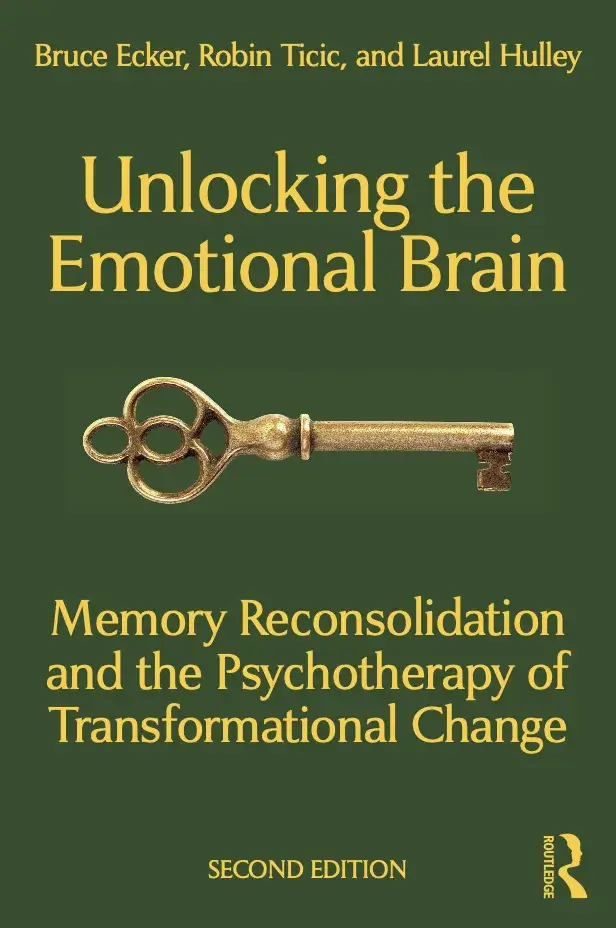
Chapter 21
This transformative therapy textbook has been described by experts as “groundbreaking” for its clear, practical guidance on how to elicit therapeutic memory reconsolidation, the brain’s actual mechanism behind breakthrough moments in therapy.
When we first seek out a therapist, deep down we’re all hoping for the profound, lasting shifts brought about by such breakthroughs. Yet many of us have felt our hopes fade after past therapies we’ve tried didn’t lead to lasting change. I have certainly felt this disappointment throughout my own experiences as a therapy client. If we have never done therapy, we might also feel confused by all the different brands and systems of therapy out there.
With all of that said…
What if breakthrough moments in therapy really could be the rule instead of the rare exception? Would a therapy approach resonate with you if: Session work moves skillfully and compassionately towards therapeutic breakthroughs, using time-tested, reliable processes informed by neuroscience?
Michael Lydon brings a gentle, nourishing strength and a genuinely spiritual, compassionate nature to his work as a Realization Process teacher and therapist. He is someone you can trust with your deepest wounds. I highly recommend him.”
– Judith Blackstone, PhD, LMHC
Founder of the Realization Process & internationally respected teacher
author of Trauma and the Unbound Body: The Healing Power of Fundamental Consciousness

Why This Approach Works
“Transformation begins when we stop mistaking the
fire alarm for the fire itself.“
– Michael Lydon, LCSW
If you’ve done years of personal growth work but still find yourself stuck in anxiety, low self‑worth, or repeating relationship struggles, it’s not because you’ve failed; it’s because most approaches treat the “fire alarms” of the mind as if they are the fire itself.
Many approaches focus on coping strategies. These are things like positive thinking, reminding ourselves of the “big picture”, using deep breathing when we’re overwhelmed, and similar. Sometimes these are essential when we are in a moment of panic, and in some moments coping strategies can even save lives. But in my view, coping strategies are more like emotional first aid: they can help greatly in a moment of need, but they are not designed to resolve the root causes of our problems.
If we want to actually resolve a more chronic issue, and we are using coping strategies as the tool to do so, this is – at worst – like hitting the silence button on the fire alarm while our house keeps burning. At best, coping strategies help us douse the flames in the living room, while the fire continues burning in the basement.
Here’s the thing: if something inside of us is sounding the alarm, it’s doing so for a reason. And the only way to really get the alarm to stop blaring in a sustainable way, is to put out the fire itself.
The Real Source of the Fire
So what is the actual “fire in the basement” that is causing the alarm to keep blaring throughout the rest of the house? The “fire” consists of one or more unconscious schemas. Schemas are deeply held (i.e. nonverbal) beliefs, emotional learnings, or mental models about ourselves, others, and reality; mostly formed earlier in life.
Schemas are generally linked with survival and attachment. They reflect how we learned to keep ourselves safe and how we learned to maintain connection with our caregivers, or other key people in our lives. For this reason, we tend to learn them during painful or defining moments in our development. Like being locked in a dream that is difficult to escape, schemas feel objectively true and real, even when our adult mind knows they are not. Example: We may know deep down we are lovable, but day to day, it just doesn’t feel like as if this is true.
Schemas “live” in what Eugene Gendlin called the felt sense, i.e. the domain of emotions, feelings, and “feeling‑knowings” that are experienced in our body, not just our thinking mind. To consider how schemas are different than ordinary beliefs, consider the gut-level intelligence that tells us to jump back from oncoming traffic. A nonverbal part of our mind that is oriented towards survival knows what the car is, what it can do to us, and what we need to do to stay safe from the car — yet all of this happens nonverbally. Schemas live at this same “gut” level of functioning and need to be integrated into conscious awareness before they are resolved.
Why Many Approaches Miss the Mark
Schemas consist of a nonverbal notion of a problem, and an urgent solution to that problem. Example: “I need to say small because my power hurts others.”
This is a mental model of both:
a) a problem: “my power hurts others,” and
b) a solution: “so, I need to stay small.”
Most of the time, we’re only aware of the solution and not the underlying problem. As insight-oriented adults, we begin to see that these “solutions” are partial, and even though they may have protected us in the past, they hinder us in the present.
This is why many therapy systems fail to fully resolve symptoms like anxiety, depression, and low self-worth. As an example, they treat low self-worth as if it is “the problem,” and do not see how it is, in fact, a solution to an even deeper problem. The deeper problem is the view of self, others, and reality that low self-worth is an attempt to (unconsciously) solve. This explains why techniques like positive self‑talk and affirmations require constant effort and never feel like full solutions – essentially, they are targeting the fire alarm instead of the fire itself.
To add insult to injury as growth oriented adults, we often receive messages from self-help and spirituality paradigms that can feel like we are being blamed and shamed for our struggles. Examples include: “drop your story,” or “drop your victim mentality.” These messages are not helpful because as growth-minded individuals, we are already taking a great deal of accountability for our lives. Also, attempting to “drop the story” as a means of solving problems like anxiety, low self-worth, depression fails because the cause of the issue is beneath verbal awareness and is thus not a “story” to begin with.
How Real Change Happens
When a reality-defining schema is fully brought into awareness and experienced in the present moment, it can be seen through and through as no longer being true, real, or necessary to believe. This kind of deep shift is not intellectual — it’s visceral, emotional, and embodied.
When this happens, the “fire” goes out organically, and the alarm naturally stops — without ongoing effort, counteractive measures, or spiritual bypassing.
The Best Part
Meaningful shifts often begin within the first few sessions, and you don’t have to spend years endlessly exploring and analyzing your past to get there.
→ Ready to explore whether this work is right for you?
Click below to schedule a free 30-minute consultation


Expert Endorsements & Client Experiences
Ready to Begin?
Finding the right practitioner can be stressful. I have also been a therapy client and know how this can go. My goal is to help you make a pressure-free, informed decision that feels aligned with your goals and values.
Schedule a Free Zoom Call
Schedule a free, confidential 30‑minute Zoom call on the calendar below to see if we’re a good fit and to get a good sense of what working together will look and feel like. If we’re not the right fit, no worries – I’m happy to provide you with relevant referrals and/or helpful resources.
Schedule a Session
Booking Instructions
- Choose your timezone. Please select your timezone at the botttom of the calendar tool.
- Select your date and time. Please click on one of the green circles to select a day that works for you, then choose the time that works best.
- Select your session duration. For free consultations: Please select 30 minutes. For full sessions: Please select 60 minutes.
- Check your email for Zoom link & calendar invite. Once you book, you will receive a HIPAA compliant Zoom link and calendar reminder for our teletherapy session. You’ll also receive email reminders in the days approaching our session.
- For Clients outside of MA. Please book therapy-informed coaching sessions here. The below calendar is for therapy clients in MA only.
- Intake forms: Please add my email, michael@realizationconsulting.com and my EHR’s email, notifications@zencarepractice.com to your contacts. Within one business day of booking, you’ll receive standard intake forms for 1:1 therapy. If you are an out-of-state coaching client, you do not need to fill out intake forms.
Michael Lydon’s Calendar for Massachusetts Clients
In Crisis?
If you need immediate support:
- Emergency: 911
- Massachusetts Crisis Line (24/7): 877-382-1609
- National Suicide & Crisis Lifeline (24/7): 988
- SafeLink: Massachusetts Domestic & Dating Violence Hotline (24/7): 877-785-2020
Please note: Realization Counseling does not provide emergency services.